

Amber Niche Perfumes: A Guide to the Scent Family
What if amber isn’t one scent at all, but a whole world of warmth? Amber niche perfumes can feel golden and softly sweet, dark and resinous, or smooth as a favourite scarf warmed by the skin. That variety is part of their appeal, but it can make online descriptions difficult to interpret when you’re still learning the language of fragrance.
You may already know what you’re looking for: a scent that’s comforting without becoming sugary, or deep and enveloping without feeling heavy. “Amber” doesn’t point to one fixed formula, so two fragrances in this family can create quite different impressions. Knowing what the word can mean makes it easier to compare descriptions and follow your own preferences.
This article explores what amber means in modern perfumery, how different amber styles can smell and feel, and what to notice as you discover your preferences. We will also explore Ambre Noir, Ambre Royal and Amber Narcotique, three amber-named fragrances available in Dot Perfume Gallery’s collection, as starting points for further exploration.
Key Takeaways
- Learn how an amber accord creates an overall impression rather than naming one guaranteed ingredient.
- Compare resinous, dry, smooth and softly sweet impressions to identify amber styles that appeal to you.
- Use texture words in descriptions to explore amber niche perfumes with greater confidence.
- Discover Ambre Noir, Ambre Royal and Amber Narcotique, or explore your fragrance preferences in a private consultation.
What Are Amber Niche Perfumes? Understanding the Scent Family
What does “amber” actually mean in a perfume? The name describes a family of scent impressions, not one guaranteed smell. Amber perfumes are fragrances built around an amber accord: a warm, rounded impression that may feel resinous, balsamic, softly sweet or richly textured. Each perfumer can interpret that idea differently, so the word is a useful guide, not a promise that every bottle will smell alike.
Perfumery amber isn’t simply ground-up amber (fossilised resin). Fossilised tree resin and ambergris are separate from the amber accord used as a fragrance idea. The name evokes warmth and depth; the finished scent depends on the materials and balance chosen by the perfumer.
What does amber smell like in a perfume?
Imagine the glow of lamplight across polished wood, or the soft warmth of a scarf held close. An amber fragrance may suggest smooth resin, balsamic richness or a gentle sweetness that feels rounded rather than sharp. Some are cosy and enveloping; others feel sheer, dry or quietly luminous.
There’s no single profile to expect. One perfume may lean smoky, another powdery, and another softly sweet or almost dry. The texture can vary too: think of the difference between velvet, warm skin and a smooth wooden surface. These words describe impressions rather than strict categories, and your sense of sweetness or warmth may differ from the language used in a description.
Is amber a single perfume ingredient?
No. In perfumery, an accord is a combination of materials blended to create an overall impression, much as several notes in music form a chord. Amber is often treated this way. Rather than relying on one universal raw material, a perfumer can bring different elements together to suggest warmth, softness, resin or sweetness.
Possible materials include labdanum, benzoin and vanilla, but they aren’t a fixed checklist for every amber fragrance. The proportions and surrounding materials shape the result, which is why one accord might feel dark and balsamic whilst another seems creamy or delicate. Think of “amber” as a direction in the composition, not a recipe printed on the label.
Why amber appears so often in niche perfumery
Amber offers room for interpretation. Its broad warmth can be shaped into contrasting moods: intimate or dramatic, smooth or textured, softly sweet or more resinous. That flexibility lets perfumers create distinctive compositions without every scent arriving at the same destination.
Amber is a flexible perfumery idea, not a fixed formula. As you explore, notice which facets stand out to you rather than asking whether a fragrance smells like amber in the abstract. It might be a comforting sweetness, a dry warmth or an atmospheric quality that makes you want to take another breath.
How Amber Perfume Accords Create Warmth, Depth and Texture
An amber accord is less like a single colour on a palette and more like a layered wash of light. A perfumer combines materials to create a particular impression, then balances that accord with the rest of the composition. The result may suggest warmth, smoothness or depth without smelling exactly like any one ingredient. A note list can offer clues, but rarely tells the whole story of a perfume.
Resins and balsamic facets in amber accords
Resinous or balsamic facets can give an amber accord a rounded, softly glowing quality, like warmth held in polished wood. Labdanum and benzoin are possible materials in this kind of composition, not requirements for every amber perfume. Benzoin is used in perfumery in varied ways; Benzoin in perfumery offers further context on the material. The finished impression depends on the blend, not the name of one component alone.
Sweetness, woods and spice: ways an amber accord can shift
Sweet facets can soften an accord and lend it a plush, rounded edge, but sweetness doesn’t automatically make an amber fragrance gourmand. Woody impressions may bring a drier, more grounded feel, whilst spicy facets can add warmth or lively contrast. These qualities can appear in different proportions, and a description mentioning one facet won’t tell you how prominent it is in the finished scent.
Imagine two compositions described as amber: one might feel smooth and gently sweet, another dry, woody and textured. The family name alone can’t tell you which direction a perfume takes. Nor does a list of named notes give you the full formula. It identifies selected elements or impressions, while the overall effect comes from how materials are combined and balanced.
Amber, ambergris and natural amber are not interchangeable terms
In fragrance, “amber” usually refers to a scent family or accord, not a bottle containing fossilised resin. Natural amber is fossilised tree resin; ambergris is a separate perfumery term, and neither is simply another name for an amber accord. This distinction helps explain why amber niche perfumes can evoke resinous warmth without being made from fossilised amber itself.
In short, an amber accord creates a warm impression through a chosen blend of materials, rather than relying on one universal ingredient. Read words such as “balsamic”, “sweet” or “woody” as clues to a texture, not guarantees of a precise formula. To compare different interpretations, explore the curated fragrance selection at your own pace.
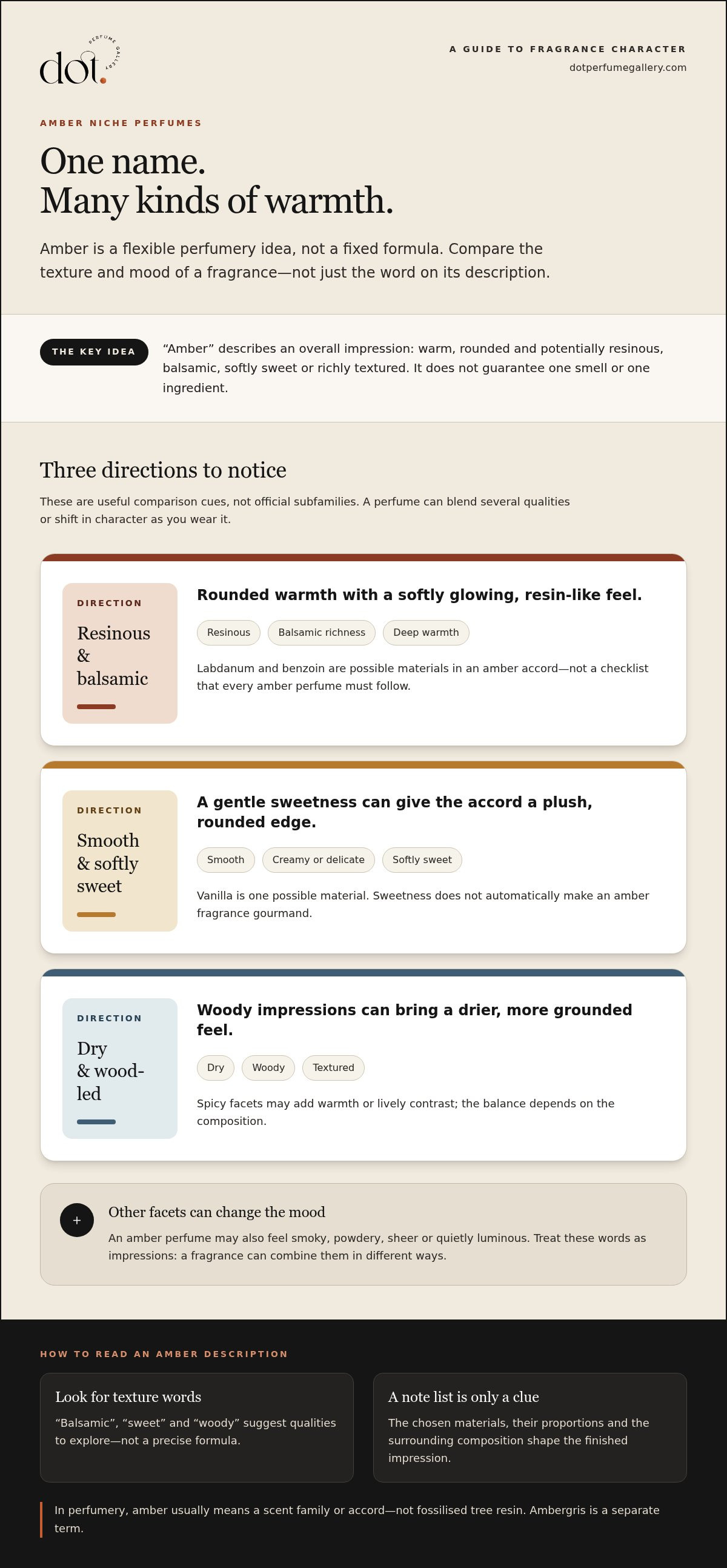
Amber Niche Perfumes Compared: From Resinous to Softly Sweet
Amber can move from deep, resinous warmth to gentle sweetness or a drier, wood-led impression. These are useful ways to compare what you read and smell, not official subfamilies with fixed boundaries. A perfume may blend several directions or shift in character as you wear it. Use the descriptions below to identify the qualities you’d like to explore.
Resinous and balsamic amber impressions
This direction may feel rounded and enveloping, like warmth settling into soft fabric. Resinous facets can suggest depth and a gently glowing richness, but “resinous” doesn’t automatically mean intense, smoky or heavy. Labdanum is one possible material associated with amber effects; Labdanum in perfumery offers further background. This impression may appeal if you enjoy warmth with a more textured presence.
Soft, sweet and vanilla-leaning amber impressions
A softer amber can feel smooth and close, with sweetness that rounds the composition rather than announcing itself like sugar. Vanilla may be one facet, but it isn’t essential to every amber accord. If you enjoy a tender, cushioned quality but don’t want an overtly sweet scent, look for descriptions that emphasise softness, creaminess or warmth rather than gourmand character alone.
Dry, woody or more complex amber impressions
Dry or woody facets can temper sweetness, giving an amber accord a more restrained, textured feel. Spicy impressions may add contrast, whilst other facets can move the composition between warmth, softness and dryness. Complexity isn’t a ranking of quality; it describes how different impressions interact. This direction may suit you if you want amber’s warmth without a strongly sweet finish.
Amber’s family name signals a direction, not a precise scent outcome. As you compare amber niche perfumes, notice which words appeal to you and which give you pause. “Soft” and “sweet” aren’t interchangeable, just as “resinous” doesn’t always mean bold. These distinctions can help you describe what you’re drawn to, while your own impression remains the final guide.
How to Explore Amber Niche Perfumes Through Your Own Preferences
You don’t need to memorise perfumery terms to find an amber style you enjoy. Start with what you already know about your preferences, use descriptions as clues and let your own impressions guide you. A simple approach can make amber niche perfumes feel less like a puzzle and more like a personal discovery.
Start with the textures and moods you already enjoy
Think beyond fragrance families for a moment. Do you gravitate towards the dry feel of woods, gentle sweetness or rounded spicy warmth? Perhaps you like a scent to feel smooth and close, or prefer one with more texture. These familiar preferences can suggest directions to explore, though they can’t guarantee you’ll enjoy a particular amber perfume.
Put those impressions into your own words. “Soft like a knitted jumper”, “dry and quiet” or “warm without feeling sugary” can be more useful starting points than technical language. Your vocabulary doesn’t need to sound like a perfumer’s. It just needs to help you recognise what feels appealing.
Read amber perfume descriptions with a discerning eye
Compare several descriptions side by side. Treat a family label and a note list as signposts, not a complete account of a perfume’s formula or character. Notice which sensory words recur and where the descriptions differ: one might emphasise a resinous impression, whilst another suggests something smoother or drier. A listed note may be only one part of the composition, not the quality that dominates your experience.
Use the comparison above to put those words in context. If “resinous”, “dry”, “smooth” or “softly sweet” catches your attention, consider what that quality might feel like to you. Where you can, compare amber fragrances with contrasting descriptions rather than several that sound almost identical. This makes it easier to work out which facets draw you in.
Notice how personal preference shapes your impression
Two people can encounter the same perfume and describe it differently. One may notice warmth first; another may focus on sweetness, texture or an unexpected dry edge. Neither response is definitive. The useful question is how the fragrance feels to you, not whether your impression matches a description word for word.
When comparing amber profiles, notice what stays with you. Does the scent feel comforting, intriguing, too sweet or more restrained than you expected? Jot down a few simple words after each encounter. Over time, those notes can reveal patterns in what you enjoy without turning discovery into a test. A family label alone can’t tell you how long a fragrance will last or how strongly it will project, so focus on the impression you can actually describe.
Let curiosity lead. Explore Dot Perfume Gallery’s curated fragrance selection or arrange a private consultation by appointment to discover which amber impressions appeal to you.
Discover Amber Niche Perfumes with Dot Perfume Gallery
Understanding amber’s varied impressions gives you a more thoughtful way to explore, but there’s no single profile everyone should prefer. The pleasure lies in noticing what feels right to you: perhaps rounded, comforting warmth or a more restrained interpretation. Dot Perfume Gallery brings together niche and luxury fragrances for people who want to explore beyond a single idea of what amber should smell like.
Explore confirmed amber-named fragrances
Ambre Noir, Ambre Royal and Amber Narcotique are three amber-named fragrances in Dot Perfume Gallery’s selection. Their names offer a natural place to begin, but they don’t tell the whole story of how either fragrance will feel to you. Despite all having 'amber' accord at its heart, all three have completely different characters. Read each fragrance’s description and notice which details catch your attention. Let your own impression guide you rather than expecting the name to guarantee a particular scent profile.
Make fragrance discovery feel personal
For a more considered introduction to amber, Dot Perfume Gallery offers private perfume consultations by appointment for a more calm and slow paced personalised discovery. Use the time to talk through the textures and moods you’re drawn to, from dry or smooth impressions to softly sweet warmth. You don’t need specialist vocabulary to begin. Simple observations about what feels inviting, or what you’d rather avoid, can help shape a personal exploration of niche fragrance.
A consultation gives your own preferences room to emerge, with space to compare impressions and reflect on what resonates. You might arrive with a clear idea of the amber direction you enjoy, or simply a few words describing a feeling you hope to find. Either is a useful starting point.
Take a gentle next step
Explore amber niche perfumes through descriptions, names and the sensations they bring to mind, but let your own response be the most meaningful guide. Keep the language that helps you, stay open to unexpected facets and give your preferences time to take shape.
When you’re ready to continue, explore Dot Perfume Gallery’s curated fragrance selection and find an amber impression that speaks to you.
Frequently Asked Questions
Is amber in perfume made from fossilised tree resin?
No, “amber” in a perfume description usually doesn’t mean fossilised tree resin is in the bottle. It points to a fragrance effect, rather like calling a colour “honeyed” without using honey as a pigment. A scent-family description and an ingredient list serve different purposes. The specific materials depend on the individual perfume.
Can amber niche perfumes smell fresh rather than sweet?
Yes. Amber niche perfumes can have a fresher impression if the composition balances warmth with brighter or drier facets. The word “amber” alone doesn’t tell you whether a perfume will feel sweet. Look for descriptions that mention freshness, dryness or a light feel, then compare them with language suggesting a richer, rounder character. These clues can narrow your search, although your own impression matters most.
What is the difference between amber and ambergris in perfumery?
Amber and ambergris are different terms. In fragrance descriptions, “amber” generally names a warm scent direction, while ambergris refers to a distinct perfumery material. The similar words can be confusing, but they aren’t interchangeable. Read either term in context rather than assuming it names the same ingredient or scent impression. A product’s ingredient information is the place to look for specifics about its contents.
Are amber perfumes usually considered unisex?
Amber perfumes can be enjoyed by anyone; a warm or sweet scent profile doesn’t belong to one gender. Some brands may use gendered labels in their marketing, but your own taste is a more useful guide. If a description appeals to you, focus on its character rather than who it’s advertised for. Trying different interpretations can help you find an amber fragrance that feels comfortable and expressive on you.
Can I layer an amber perfume with another fragrance?
Yes, you can experiment with layering, though do it with caution as the result depends on the fragrances and how they meet. To keep the first test simple, try each scent on a separate paper strip, then compare them together before wearing both. If you like the combination, apply lightly to a small area and give the scents a moment to settle. Make a note of what you enjoy, so you can adjust the balance next time.