

How to Sample Perfume and Find Scents That Suit You
A small vial can reveal more than a passing first impression. Perfume samples typically range from 1 to 5 ml, with 1 to 3 ml a common size for trying a scent before choosing a full bottle. These perfume sampling tips will help you test a fragrance thoughtfully, giving it time to unfold rather than judging it by its first, fleeting notes.
It’s easy to love a perfume on the first spray, then find it smells different on your skin or as the hours pass. Give it time: smell each fragrance with a rested nose, notice how it develops, and try it in different conditions. These perfume sampling tips explain how to use a blotter and your skin, reset your sense of smell between scents, and compare a fragrance throughout the day, so you can choose one that feels right for you.
Key Takeaways
- Match the number of sprays to a fragrance’s concentration, and give each scent room to unfold on skin.
- Use coffee aromas or the scent of clean skin to refresh your nose between tests; leave applied perfume untouched.
- Revisit a fragrance as the day progresses and in different weather to notice how its character shifts.
- Space out bold and subtle scents, and keep blotter testing limited so your nose stays receptive.
- Choose a sample format that gives you enough time to wear the fragrance and see how it settles into your routine.
What Are Perfume Samples?
Perfume samples are small amounts of fragrance for exploring a scent before choosing a bottle. They typically range from 1 to 5 ml; a sample lets you wear the perfume and notice how it feels beyond a first impression.
Yes, you can take perfume samples on UK flights, subject to the liquid rules at your departure airport. Pack them with your other permitted liquids.
Store perfume samples away from heat and light. A shaded drawer helps protect them from direct sunlight and temperature changes.
To find free perfume samples in the UK, ask at fragrance counters or look for samples included with perfume purchases. Availability varies, so ask politely before choosing a scent.
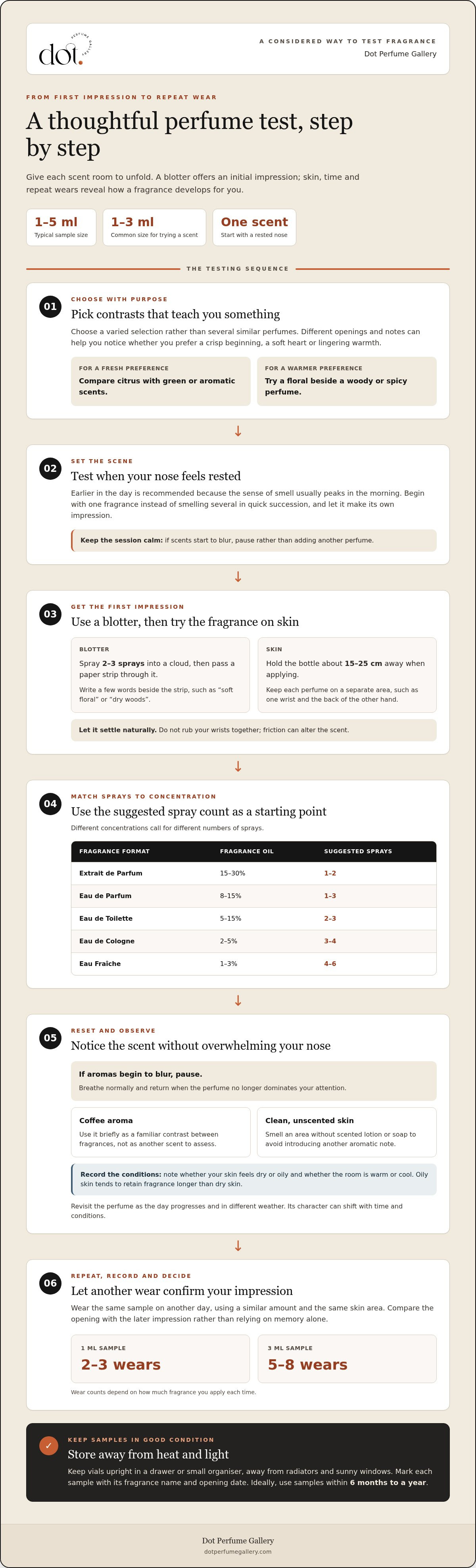
- Choose a sample with a purpose. If you enjoy fresh scents, compare citrus with green or aromatic fragrances. For a warmer preference, try a floral beside a woody or spicy perfume. These perfume sampling tips help you explore contrasts, rather than choosing several similar bottles and learning little about your preferences.
- Vary the notes in your selection. Try perfumes with different openings, such as bright citrus, delicate florals and deeper woods. Notes describe the changing impressions of a fragrance as you wear it. A varied selection can show whether you prefer a crisp beginning, a soft heart or a lingering warmth.
- Choose a time when your nose feels rested. Testing earlier in the day is recommended because the sense of smell usually peaks in the morning. Start with one fragrance, rather than smelling several bottles in quick succession. A quiet morning gives each scent room to make its own impression.
- Match sprays to fragrance concentration. For Extrait de Parfum, with 15-30% fragrance oil, use 1-2 sprays. Eau de Parfum, with 8-15%, calls for 1-3 sprays; Eau de Toilette, with 5-15%, calls for 2-3. For Eau de Cologne, with 2-5%, use 3-4 sprays. Eau Fraîche, with 1-3%, takes 4-6 sprays. These perfume sampling tips offer a starting point for wearing each format.
- Use a blotter for an initial impression. Spray two or three sprays into a cloud, then pass a paper strip through it. To test on skin, hold the bottle about 15-25 cm away. Write a few words beside each strip, such as “soft floral” or “dry woods”, to keep scents distinct in your memory.
- Store each sample with care. Keep vials upright in a drawer or small organiser, away from radiators and sunny windows. Mark each with its fragrance name and opening date. Ideally, use perfume samples within 6 months to a year, then keep notes on the fragrances you’d like to revisit.
- Choose a format that allows repeat wears. A 1 ml sample can provide 2-3 wears, while a 3 ml sample can provide 5-8, depending on how much you apply each time. Repeated wears can help you decide whether a perfume suits your routine, not just one particular moment.
Using coffee beans or clean skin as a palate cleanser
Coffee aromas and clean skin offer two simple ways to reset between fragrances. Use them thoughtfully to distinguish your impressions of each scent.
- Pause when scents begin to blur. If one perfume starts resembling the next, stop testing rather than adding another fragrance. Your nose needs a quieter moment; continuing can make differences in softness, brightness or warmth harder to notice. Set the sample aside, breathe normally, and return when its aroma no longer dominates your attention.
- Use coffee aroma as a brief reference. Smelling coffee beans between fragrances can help keep their perceived intensity more consistent. Let the coffee provide a contrast, not another scent to assess. Then return to the perfume and notice whether its opening feels fresh, dry or sweet beside that familiar roasted aroma.
- Try clean skin if coffee isn’t available. Smell an unscented area of your skin between samples. Its familiar, neutral scent can help reset your nose without introducing another aromatic note. Choose skin without scented lotion or soap, since those products could mingle with the perfume and complicate your impression.
- Keep each perfume on a separate area. Apply one fragrance to your wrist and another to the back of your other hand. This lets you compare them without layering their aromas in one place. Keep a note of which scent is where, especially if you’re testing several samples during the same session.
- Leave the fragrance untouched after application. Rubbing your wrists together can alter the scent. Instead, let each application settle naturally and smell it without pressing or warming the skin through friction. This makes your test more consistent, so the impression comes from the perfume’s development rather than how you’ve handled it.
- Record skin feel and surrounding conditions. Note whether your skin feels dry or oily, and whether the room feels warm or cool. Oily skin tends to retain fragrance longer than dry skin, so wear time can differ. A short note such as “dry skin, cool room” gives useful context when comparing repeat wears.
- Repeat the test before deciding. Wear the same sample on another day, using a similar amount and the same skin area. Compare the opening and the later impression, rather than relying on memory alone. If the scent seems different, consider the skin feel and surroundings you recorded, then decide which version suits you best.
- Keep a small comparison record. Write the perfume name beside a few direct impressions, such as “soft floral” or “warm wood”. Add whether coffee or clean skin helped you reset between tests. These simple details help separate your own response from the influence of a neighbouring fragrance.
Testing perfume at different times and in different weather
To compare a blotter with skin, spray two or three sprays into the air and pass the strip through the mist. On skin, use two spritzes on your wrist or the back of your hand, then let the fragrance settle before smelling it.
- Begin with a patch test. Before applying fragranced products more widely, test a small area for sensitivity. Solstice Scents recommends patch testing before applying fragranced products all over. Follow this step for each new sample, and avoid treating a blotter test as a substitute for a skin test.
- Apply perfume in the morning. Try it after a shower, then wear it through the day. Testing one perfume per day gives each fragrance space to develop without another scent competing. Note the weather and setting, such as a cool morning indoors or a warm afternoon outside.
- Wait before smelling your skin. Give the perfume at least 30 seconds to settle after application. Smelling it immediately can capture a sharp first impression rather than its settled opening. Keep the wrist still, and avoid rubbing the fragrance into your skin.
- Check the top notes during the first 10 minutes. Notice the opening as it rises from your skin: citrus can feel bright, whilst aromatic notes may seem crisp. Top notes typically last about 15 to 30 minutes, so record a few words early rather than relying on memory later.
- Return after 15-30 minutes or longer. Heart notes begin to emerge after the first 30 minutes and often remain for several hours. Notice whether the fragrance softens, becomes more floral, or shifts towards spice. Those changes can matter more than the first spray.
- Smell the perfume again after 2 to 3 hours. Base notes appear after a few hours and can sometimes last for the entire day. Look for a warmer, deeper finish beneath the opening. Base notes can linger for up to a day, while the heart may stay present for several hours.
- Compare weather conditions across separate wears. Wear the same fragrance on a cooler day and a warmer one, keeping the application and skin area consistent. Record how noticeable it feels, whether its warmth or freshness stands out, and how long you notice it. This makes the comparison more useful than changing several conditions at once.
- Repeat before choosing a bottle. Return to the sample on another day and compare your notes from each wear. A parfum that feels luminous in cool air may seem richer in warmth; look for the version that feels comfortable in the settings where you’ll wear it.
Avoiding olfactory fatigue
Test no more than 3 fragrances on paper blotters in a day. For skin, give one perfume the day to develop before sampling another.
-
Space out fragrance tests
Leave a fragrance-free day between testing a bold scent and a subtle one. This pause helps prevent the stronger perfume from lingering in your attention as you assess a quieter fragrance. Avoid spraying perfume on clothing or nearby surfaces during the break, as those aromas may carry into your next test.
Between blotters, step away from the testing area and breathe normally. If the scents begin to blur, stop rather than force a decision. Return to your notes later, when you can distinguish the soft, bright or warm impressions you recorded for each sample.
Keep the day between contrasting perfumes genuinely fragrance-free. Scented hand cream, room sprays and fragranced laundry can all affect your impression. If you’ve worn a bold perfume, use unscented products before judging a delicate floral or sheer musk.
Keep a simple record for each test: the fragrance name, your first impression and how clearly you can still smell it. A note such as “smoky, still prominent” is a reason to pause before trying a subtle scent. Don’t mistake a tired nose for the perfume’s true character.
-
Limit perfumes tested at once
Keep paper-blotter testing to no more than 3 fragrances in a given day. Label each strip before spraying, then smell them one at a time. Stop at the first sign that you can’t tell their differences; more tests won’t necessarily bring a clearer answer.
For skin testing, focus on one perfume per day so it has room to develop. Apply it to one area and notice how its character changes as you wear it. Testing several fragrances on your skin at once can make their aromas mingle, leaving you unsure which one you’re responding to.
Choose three blotters with a purpose, such as a citrus scent, a floral and a woody fragrance. Contrasting styles make it easier to compare broad impressions without filling the session with near-identical perfumes. Write a few words beside each strip, then revisit your notes later.
If you’re keen to explore more, plan another session for a different day. Keep the next selection small and varied rather than adding extra strips to the first round. This measured approach protects your attention and gives each perfume a fair chance to make its own impression.
When your nose feels overloaded, end the session. Take a fragrance-free day before returning to a subtle sample, especially after wearing a bold perfume. A deliberate pause is more useful than repeatedly smelling the same strip and hoping its details become clearer.
Perfume sample sizes and formats
In the UK, you can try a perfume without buying a full bottle by choosing a sample or travel spray. Pick a format that lets you wear the scent as part of your usual routine.
- Start with a small sample for an initial impression. Perfume samples typically range from 1 to 5 ml, while 1 to 3 ml is a common size. These vials are compact and suit a first exploration. Check whether the format is a spray or a dabber, since application can affect how easily you repeat your test.
- Choose a larger sample when you need repeat wears. A 1 ml sample can provide 2-3 wears. A 3 ml sample can provide 5-8 wears, depending on how much you apply each time. Choose enough for more than one occasion if you want to experience the opening, later development and dry-down across separate days.
- Consider a travel spray for a scent you already enjoy. Perfume travel sprays are usually around 10 ml. Their larger format suits carrying a familiar fragrance in a handbag or overnight case. Use one after you’ve explored the scent, rather than assuming a brief first impression will tell you how it fits your life.
- Match the container to your testing habit. A spray vial offers quick, repeatable application; a dabber lets you apply fragrance in smaller amounts. Keep the format consistent when comparing two scents. If one is sprayed and another dabbed, the difference in application may influence how much fragrance reaches your skin.
- Keep samples organised between wears. Label each vial with the perfume name and store it upright, away from heat and light. A small box keeps samples together, whilst separate spaces prevent labels becoming confused. Ideally, use perfume samples within 6 months to a year, so older vials don’t remain forgotten in a drawer.
- Let the amount serve the decision. Choose a smaller sample if you’re exploring a new scent family; choose a travel spray if you’ve already worn the fragrance and want it close at hand. Keep brief notes after each wear, such as where you wore it and which part felt most appealing. This turns a few measured trials into a clearer choice.
- Make sample testing part of a considered selection. A sample is useful when you want to see whether a fragrance feels right beyond the counter or first spray. Keep your shortlist focused, wear each scent on separate occasions and compare your notes before choosing a bottle.
For more fragrance inspiration as you explore different formats, browse curated perfume selections.
Dot Perfume Gallery: Andevalo
Dot Perfume Gallery offers Andevalo for those ready to explore a fragrance beyond the first impression. If you’ve narrowed your preferences but would like help considering a scent, a private consultation offers time to discuss what draws you in, from a luminous opening to a softer, lingering finish.
You might also explore Ambre Noir or Carduus as you discover which fragrances feel most natural on your skin. Let your sampling notes guide the conversation, whether you’re drawn to something warm, delicate or distinctive. The aim is to bring your own impressions into the choice, rather than rush towards a bottle.
If you’d like to explore Andevalo or arrange a private consultation, contact Dot Perfume Gallery.
Let your next fragrance choice feel personal
A fragrance can become part of how you mark a morning, settle into an evening or carry a memory with you. Let these perfume sampling tips guide a more personal choice: consider not only which notes you enjoy, but how you want to feel when the scent becomes part of your day.
If you’re ready to explore further, Dot Perfume Gallery offers Andevalo and Ambre Noir, as well as private consultations. Bring your impressions, preferences and questions to start a thoughtful conversation about the fragrances that draw you in.
There’s no need to hurry towards a favourite. Allow curiosity to lead, and let your response to a scent become clearer with each considered choice. Contact Dot Perfume Gallery to begin exploring, and enjoy discovering a fragrance that feels distinctly yours.
Frequently Asked Questions
How to sample perfume properly on skin?
Apply perfume to clean, dry skin, using a separate area for each scent to keep the aromas from overlapping. A single spray on your forearm is a useful starting point. Let it settle without rubbing, which can disturb the scent and make comparisons harder. Avoid applying perfume over scented body lotion, as it may alter what you smell. These perfume sampling tips help you notice how a fragrance wears on your skin.
How long should you wait before judging a perfume?
Wait at least an hour before deciding whether a perfume suits you, then smell it again later in the day. The first impression may be bright or sharp, while the fragrance can soften into warmer, quieter notes as it develops. If you’re considering a scent for evening wear, try it in the morning and revisit it before you dress. A quick sniff at the counter won’t reveal the whole story.
Best places to apply perfume when sampling?
Try the inner forearm or the crook of your elbow, where you can smell the fragrance easily without bringing your wrist close to your face. Choose an area that won’t be covered by a tight sleeve, and avoid testing on skin that’s irritated or freshly shaved. For a clear comparison, use different arms for two scents and keep each application small. Don’t spray several fragrances onto one wrist.
How to avoid fragrance sensitivities when testing perfumes?
Start by smelling a spray on a paper blotter rather than applying it directly to your skin. Hold the blotter at a comfortable distance, and test one fragrance at a time in a well-ventilated space. If you have a known fragrance sensitivity or a history of reactions, ask a healthcare professional for advice before trying a skin test. Stop testing and wash the area if discomfort develops.
How to compare perfume notes and dry-down?
Write down your first impression, then return to the same scent after it has rested on your skin. Notice what changes: perhaps a crisp citrus opening gives way to a soft floral heart, then a warmer, woody finish. Compare one detail at a time, such as sweetness or freshness, rather than trying to identify every note. For a considered second perspective, Dot Perfume Gallery offers private consultations.