

Modern British Masters: A Buying Guide to Contemporary British Perfume
What if the best way to choose a fragrance is to begin with how you want to feel, rather than with a list of notes? A scent can sound beautiful in a description yet unfold differently on your skin. The many directions within modern british masters make that first choice intriguing, if a little daunting.
If notes such as amber, woods or florals feel more evocative than informative, you’re not alone. This collection brings together 72 fragrances shaped by contemporary perfumers’ individual vision and craft. Each offers its own atmosphere, texture and presence. Notice what draws you in: soft, enveloping warmth, something green and vivid, or a fragrance that feels quietly assured.
This guide will help you form a considered shortlist by comparing scent character and mood, rather than relying on note lists alone. You’ll find practical ways to read fragrance descriptions, notice how a scent develops on your skin and choose with greater confidence. Start with the directions that appeal, then let your own experience shape the final choice.
Key Takeaways
- Modern british masters brings together contemporary perfumery shaped by individual craft and vision.
- Build a shortlist by starting with the mood you want, then use scent language and texture to refine your preferences.
- Explore eight contrasting fragrance directions as starting points, not as a ranking of what you should choose.
- Give a fragrance time to develop on your skin. Its first impression may differ from the softer, lingering dry-down.
- Use your shortlist to explore the wider range of 72 products and discover which scent feels most like you.
What does Modern British Masters mean in contemporary British perfumery?
Search for “Modern British Masters” and you may find references to an art exhibition, a BBC television series about British art or a golf tournament. Here, the phrase introduces a fragrance collection centred on contemporary perfumers and their individual creative visions. It’s a way into a curated group of scents, not a reference to paintings, television or sport.
The collection brings together considered craft and distinctive points of view. It doesn’t promise one signature style. Instead, it invites you to encounter perfume as a series of personal interpretations. One fragrance might feel sheer and composed; another may seem warmer, more textured or more expressive. Those differences are part of the appeal, and they give you room to find what feels at ease on your own skin.
Perfume has a long, wide-ranging history, and contemporary work forms part of that continuing story. For a broader view of its development across cultures and eras, the History of Perfume offers useful context. This collection, by contrast, focuses on present-day perfumers and the particular character each brings to a finished scent.
What makes a contemporary perfumer a master?
In this collection, “master” is best understood through its emphasis on practiced skill, precision and individual vision, rather than as a formal industry title. A perfumer’s craft comes through in how a fragrance is composed: how its facets sit together, how its mood takes shape and how it changes as it’s worn. Precision needn’t mean severity. It can create a sense of balance, so a scent feels considered without losing its warmth or personality.
That creative point of view matters to you as a wearer. A well-composed fragrance can be more than a pleasing opening impression; it can settle into something recognisable and personal. Think of it as choosing an atmosphere to carry with you, whether that means quiet softness, brightness or a deeper, more enveloping presence. The description gives you a starting point. Wearing the scent lets you discover how its composition feels in your own day.
How is this collection different from a single fragrance house?
A single fragrance house presents scents within one house’s creative identity. Modern British Masters is a curated collection of 72 products, bringing different fragrance expressions together in one place. You can explore a wider field of discovery, with distinct moods, materials and scent directions rather than one formula or fragrance family.
That variety is useful if you’re still discovering your preferences. Compare the descriptions, notice which textures or atmospheres keep drawing your attention, and look for a personal thread between otherwise contrasting scents. There’s no need to treat the collection as a ranking or assume that one profile represents every fragrance in it. Its value lies in the individual visions it gathers, giving you room to explore until one feels unmistakably yours.
How to choose from Modern British Masters: compare scent character and mood
A useful shortlist starts with your response, not a hunt for the “right” note. Ask what you’d like a fragrance to bring to the day: freshness, softness, warmth, intrigue or a more expressive presence. That feeling gives you a direction to explore before unfamiliar ingredients make the choice seem more complicated than it is.
Start with the feeling you want to wear
Picture the moment you have in mind. Perhaps you want something bright and easy for daytime, a gentle floral softness or a deeper scent for a quiet evening. Mood is a compass, not a promise. The same description can feel different on different skin, so use it to guide your shortlist rather than decide for you.
Use fragrance notes and textures to narrow the shortlist
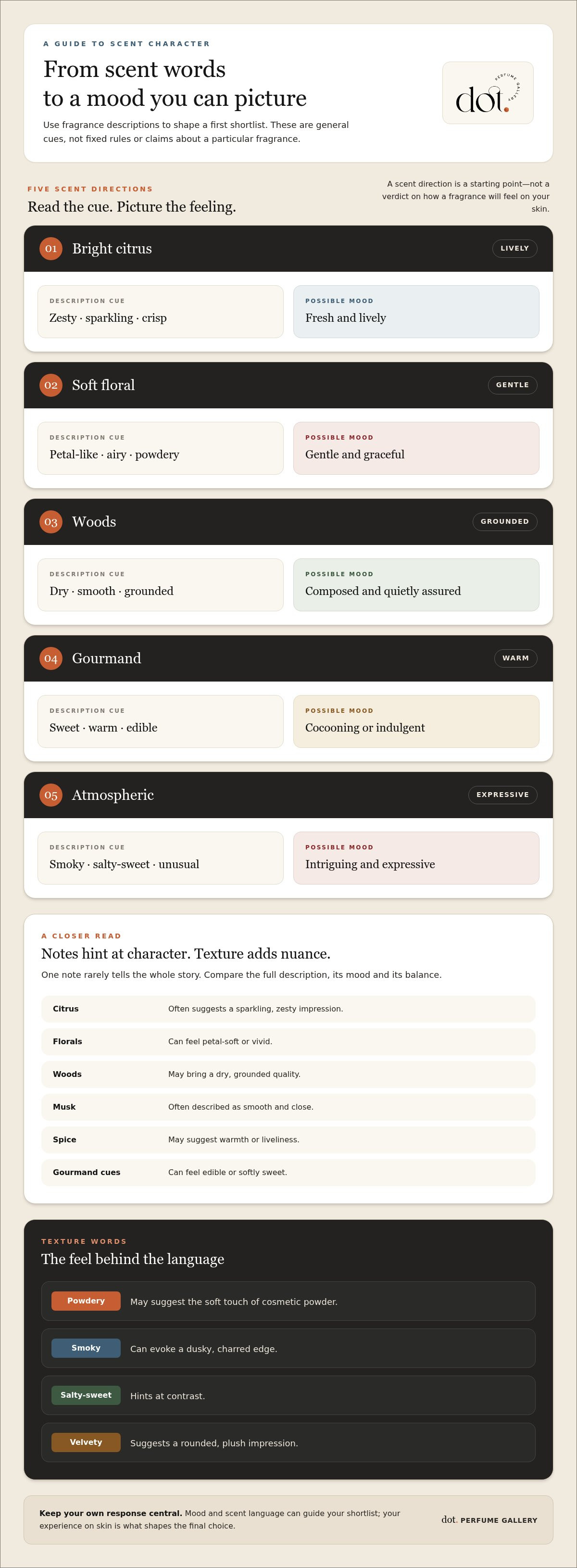
Notes offer clues to a fragrance’s character. Citrus often suggests a sparkling, zesty impression; florals can feel petal-soft or vivid; woods may bring a dry, grounded quality. Musk is often described as smooth and close, spice as warm or lively, and gourmand cues as edible or softly sweet. Read these as impressions, not fixed rules.
Texture words can help you imagine how those elements might come together. “Powdery” may suggest the soft touch of cosmetic powder; “smoky” can evoke a dusky, charred edge; “salty-sweet” hints at contrast, while “velvety” suggests a rounded, plush impression. A single note rarely tells the whole story. Compare the full description, including its mood and balance, and notice which language keeps drawing you back.
Use this guide to turn common scent directions into a first shortlist. These are general cues for reading fragrance descriptions, not claims about a particular fragrance in the collection.
| Scent direction | Sensory cue | A possible mood |
|---|---|---|
| Bright citrus | Zesty, sparkling, crisp | Fresh and lively |
| Soft floral | Petal-like, airy, powdery | Gentle and graceful |
| Woods | Dry, smooth, grounded | Composed and quietly assured |
| Gourmand | Sweet, warm, edible | Cocooning or indulgent |
| Atmospheric | Smoky, salty-sweet, unusual | Intriguing and expressive |
Fragrance language also shifts with fashion and personal taste. For wider context on how the UK market is discussed, Mintel’s UK Perfumes and Fragrances Market Trends provides a broader reference point. Your own preferences remain the most useful guide. As you explore modern british masters, note the moods, familiar cues and textures that appeal, then compare them with product descriptions and the occasions you have in mind.
Once a few directions feel promising, browse the British fragrance collection and shape a shortlist. Use the descriptions to identify scents worth exploring, then leave room for your experience on skin to have the final say.
Modern British Masters fragrances to explore: eight distinct scent directions
A scent description is most useful when it gives you a feeling to follow. The examples below offer different ways into the Modern British Masters collection, from bright citrus and soft rose to polished wood, gentle gourmand warmth and unusual salty-sweet contrasts. They’re selected examples from the collection’s 72 products, not a ranking. Each may appeal for a different reason, and your own response on skin remains part of the choice.
Use these seven fragrance descriptions to make a grounded comparison, then explore the wider collection for another mood that catches your attention. Focus on the qualities that appeal, rather than trying to find a single profile that defines the whole range.
From luminous citrus to soft floral
Begin with brightness if you’re drawn to a lively, aromatic impression. For something gentler, a powdery rose offers a softer, more composed character. The contrast is less about choosing between “light” and “strong” than noticing which description feels closer to your own taste.
| Fragrance | Confirmed scent direction | May appeal if you enjoy |
|---|---|---|
| Bergamotto di Positano | Luminous citrus-aromatic | A bright, clear impression with aromatic character. |
| Parisienne | Soft, powdery rose in the gender-neutral Collection Noir | A gentle floral mood with a powder-soft quality. |
| Special No 127 | Bright citrus aromatic, with bergamot, orange, lavender and patchouli | Citrus freshness balanced by aromatic notes. |
From contemplative woods to expressive gourmand
Other descriptions invite you into deeper, more textural scenes: the quiet impression of old paper and polished wood, the softness of oak-cask warmth, or the intriguing meeting of fruit, salt and driftwood. These are different kinds of character. Consider which image you’d most like to explore rather than assuming a shared ingredient means two fragrances will feel alike.
| Fragrance | Confirmed scent direction | May appeal if you enjoy |
|---|---|---|
| Cathedral Library | Old paper, polished wood and leather impression | A contemplative, library-like atmosphere with dry, tactile materials. |
| Spiritcask | Warm, soft gourmand built around new-make spirit and oak casks | A rounded, softly warming character rather than a bright citrus direction. |
| Phloem | Salty-sweet fruit, with passion fruit, rhubarb, ambrette, sesame and driftwood | Contrasting fruit and savoury, coastal impressions. |
| Trimerous | An orris-root meditation with iris, suede and incense | A reflective, textured direction shaped by floral, soft-leather and incense cues. |
Treat each row as a prompt, not a verdict. If one description speaks to you, note the qualities that appeal, then compare it with other directions before deciding what to explore. Browse the collection page for current product information, descriptions and size options. Its wider range may reveal another character that feels even more like you.
How to choose your Modern British Masters fragrance without common mistakes
A fragrance description can help you form a shortlist, but the final choice is more personal: how the scent feels as it settles on your skin, and whether you enjoy living with it. Give yourself time to notice that difference. A measured approach is more revealing than choosing from one note or deciding after a single first impression.
How should you sample a fragrance before choosing?
Try one fragrance at a time on skin when possible. Smell it at first application, then return to it later and notice what has changed. The opening can feel bright or vivid; as its more fleeting facets recede, the fragrance may become softer, warmer or more textured. This later impression, often called the dry-down, can feel quite different from the first few moments.
Keep the experience simple. Avoid testing several scents together or repeatedly reapplying before you’ve had a chance to notice the first one. A brief note on your phone can help: record your initial response, how it feels later and whether you’d want to wear it again. For more ideas on taking a considered approach, explore our British fragrance collection as you compare your shortlist.
Which common perfume-shopping mistakes can you avoid?
Don’t let a single appealing note make the decision for you. Two fragrances may both include rose, woods or citrus yet create very different overall impressions through their balance and supporting elements. Fragrance-family labels are useful signposts, not strict boxes: a composition can combine floral softness with woods, or sweetness with a more savoury edge.
Other people’s preferences can be interesting, but they can’t replace your own response. A scent that someone else finds beautiful may not feel like you. Notice whether you enjoy its character on your skin and in the moments that follow. And don’t treat the first impression as the whole story. Give a possible favourite time to unfold before ruling it in or out.
Use this four-step process to make your choice more deliberate:
- Shortlist: Choose a few descriptions that match the mood or scent character you’re drawn to.
- Sample thoughtfully: Test one fragrance at a time on skin when you can, rather than layering several impressions together.
- Let it develop: Notice the opening, then revisit the scent as it settles and its character changes.
- Reflect: Ask whether you liked the full experience, not just one note or another person’s reaction.
Finally, think about format without assuming every fragrance is offered in every size. Where listed, the 30 ml and 50 ml variants can help you consider which format suits your plans. Once you’ve narrowed your preferences, explore the Modern British Masters fragrances and compare product details before settling on the one that feels most natural to wear.
Explore Modern British Masters and find your considered fragrance choice
A confident choice doesn’t require knowing every ingredient or following a particular rule. Begin with three simple observations: the feeling you want from a fragrance, the scent direction that draws you in and how the scent actually feels on your skin. Together, they make a personal compass for exploring modern british masters, without asking you to choose by trend or expectation.
How can you turn a shortlist into a confident choice?
After sampling, take a quiet moment to compare your impressions. Which fragrance felt bright, soft, warm or intriguing? Did that mood remain appealing as the scent developed, or did another facet become more memorable? Notice the whole experience, from first impression to later dry-down, rather than letting one attractive note make the decision for you.
Then revisit the descriptions with your own words in mind. Perhaps you’re looking for something airy and floral, or a more grounded, contemplative character. Your notes can help you recognise which descriptions align with what you enjoyed wearing. They’re not a formula; they simply make it easier to compare possibilities and return to the scents that felt most natural to you.
Let personal enjoyment take precedence over assumed occasion rules. A fragrance needn’t be reserved for a particular season, time of day or kind of event if you enjoy wearing it in other moments. The right choice is the one whose character feels welcome in your own life.
Where can you continue exploring the collection?
The Modern British Masters collection brings together 72 products, giving you a broad selection to compare once you have a sense of your preferred mood and scent direction. Browse the descriptions at your own pace, keeping your shortlist close. Familiar impressions can help you notice a new possibility without narrowing your curiosity too soon.
If you’d value a more personal discussion of what you enjoy, Dot Perfume Gallery offers private perfume consultations by appointment on Tuesday to Thursday evenings. Talk through the scent impressions you tend to enjoy, whether that’s soft florals, polished woods or a fragrance with a more unexpected character. Your preferences give the conversation a practical starting point.
There’s no need to hurry towards a decision. Let your impressions settle, return to the descriptions that spoke to you and choose the fragrance you’ll be glad to wear. Explore Modern British Masters and find a scent that feels distinctly your own.
Let your next fragrance become part of your story
A fragrance can mark a mood, soften the edges of a busy day or bring a small sense of ceremony to an ordinary moment. Let that personal connection matter more than choosing what seems fashionable or what you think you ought to wear. Your preferences may shift with the seasons and over time; discovering a scent you enjoy now is its own quiet pleasure.
Let curiosity guide your next step. Return to the modern british masters fragrances that stayed in your thoughts, and look beyond the first impression to the character you’d welcome wearing. There’s no need to make the choice feel like a test. The most considered fragrance is often the one that feels comfortable, intriguing and distinctly yours.
Explore the Modern British Masters collection and find a fragrance that brings a little more meaning to the moments you wear it. Trust what draws you in, and enjoy discovering where it leads.
Frequently Asked Questions
What does Modern British Masters mean in perfumery?
In perfumery, modern british masters refers here to a curated collection of fragrances shaped by contemporary perfumers’ craft and individual vision. It isn’t a fragrance family with one expected smell. Treat the name as an invitation to explore different compositions. If you’re drawn to a particular description, follow that scent direction and consider how it fits your preferences, rather than expecting every fragrance in the collection to share a style.
Is Modern British Masters a fragrance house or a collection?
Modern British Masters is presented as a collection, not a single perfume house or one fragrance. Its name describes the curatorial idea that brings different fragrance expressions together, rather than a formula shared by every product. When comparing options, look at each individual listing for its character and details. This helps you focus on the scent that appeals to you instead of assuming the collection has one uniform style.
Can I choose a perfume from its description alone?
A description can help you decide what to explore, particularly if it mentions notes or textures you already enjoy. It can’t tell you exactly how the fragrance will feel once worn. If you’re choosing for an important occasion, try to sample a promising option beforehand and notice whether you still enjoy it after it has settled. Think of the description as a useful first guide, then trust your own impression.
How many perfumes should I test at once?
There’s no fixed number that works for everyone, but comparing a small shortlist can make each fragrance easier to remember. Try one scent at a time and leave space between tests so the impressions don’t blur together. If several descriptions catch your eye, explore them at separate moments rather than making a quick decision after smelling many fragrances together. A few clear impressions are often more useful than a long list you can’t distinguish.
Are the fragrances in Modern British Masters gender-neutral?
The collection includes different fragrance expressions, and Parisienne is described as a gender-neutral fragrance in Collection Noir. That description doesn’t establish a gender designation for every other product, so refer to each listing for its own wording. You can also choose by the character you enjoy: a soft rose, a dry wood or a bright citrus impression can appeal regardless of who the fragrance is marketed towards.
What is the difference between a 30 ml and a 50 ml perfume?
Millilitres measure the volume of fragrance in the bottle; they don’t indicate a difference in scent profile. Selected products, including Spiritcask, Nectary, Phloem and Trimerous, have 30 ml and 50 ml variants. If you’re deciding between sizes, consider how you expect to use the bottle and whether you’re still exploring the scent.
How do I choose between a fresh, floral and woody perfume?
Start by asking which impression you’d most enjoy wearing: fresh scents may suggest a crisp, bright feeling, florals can feel petal-soft or powdery, and woods may bring a drier, more grounded character. These are broad cues, not strict divisions. A fragrance can combine several directions, so read its full description rather than judging it by one label. If you’re unsure, shortlist descriptions that sound appealing and compare them individually.
Can I get help choosing a fragrance from the collection?
Yes. Dot Perfume Gallery offers private perfume consultations by appointment on Tuesday to Thursday evenings. Use the conversation to describe the scent impressions you tend to enjoy, such as fresh citrus, soft florals or a more textured, woody character. If you’d rather begin on your own, browse the product descriptions and note which ones interest you. That gives you a useful starting point for a more personal discussion.