

Woody Perfumes: A Buying Guide to Finding Your Scent
What if the woody fragrance you’re drawn to isn’t the one you’d most enjoy wearing? The word can suggest crisp, dry timber, smoky depth or soft, resinous warmth, and each can feel quite different on skin.
If perfume descriptions leave you guessing, you’re not alone. A scent that sounds intriguing on paper may turn out richer, smokier or gentler than you imagined. This guide will help you compare woody textures and moods, interpret product descriptions and choose a fragrance with greater confidence.
Explore a curated collection of 52 woody fragrances, from fresh, smoky woods to atmospheric, bookish, whisky-inspired and oud-led scents. We’ll look at the character each brings and how to narrow your options, whether you’re seeking something clear and dry or a deeper, more enveloping warmth.
Key Takeaways
- Look beyond the woody label: texture and warmth offer a clearer sense of how a fragrance might feel.
- Use familiar materials and scents you enjoy to identify the character you’re naturally drawn to.
- Compare descriptions by mood as well as by notes, and consider sampling before choosing.
- A simple decision process can help narrow your options without relying on fragrance terminology alone.
- Explore different woody styles to find a direction that feels personal.
Woody perfumes: what the scent family can mean
“Woody” doesn’t describe one single smell. It’s a broad fragrance character that might feel bright and dry, soft and creamy, smoky, earthy or richly resinous. The shared impression is often grounded and warm, with associations drawn from timber and bark, roots and leaves, or resin warmed by the sun.
A woody fragrance has a grounded, wood-like character, but it can range from crisp and airy to smooth, smoky or deeply resinous. Fragrance families are a useful starting point, not a complete picture of how a perfume will feel. The Fragrance wheel classification gives an overview of how families are grouped, whilst individual scents can combine facets in unexpected ways.
What makes a fragrance feel woody?
Wood-inspired impressions can lend a scent dryness, warmth, depth or softness. Picture the clean, lightly austere feel of polished timber, the smoothness of cream or the cool dampness of earth beneath leaves. These comparisons help you imagine texture and mood; they don’t promise that a perfume will smell exactly like the material.
The overall impression depends on how a fragrance’s different elements come together. One scent might feel quietly dry and open; another may wrap a similar grounded quality in a softer, warmer impression. Treat imagery as a first clue, then ask which textures appeal to you most.
Are all woody perfumes deep and heavy?
No. A wood-led scent doesn’t have to feel dense, dark or strongly smoky. Lighter citrus or aromatic openings can bring freshness, while deeper woody accords give a fragrance a more grounded character as it develops. This contrast can make a scent feel more nuanced than the family label suggests.
Berlin is an example of contrasting facets: its description brings together fresh, peppery and smoky impressions. Rather than reading “smoky” as the whole story, notice how freshness and peppery character may balance that darker suggestion. Consider which quality attracts you and whether you’d welcome the others as a counterpoint.
As you browse, look for the balance behind the descriptive words. “Dry” might sound clean and restrained, whilst “resinous” can suggest a rounder, warmer mood. Neither term alone tells you exactly how a perfume will feel on your skin. Thinking in textures and contrasts is more useful than assuming every fragrance in the family will be heavy or choosing by one evocative word.
Compare woody notes by texture, warmth and depth
Thinking in textures makes fragrance descriptions easier to compare. Some familiar woods suggest a clean, dry impression; others feel smooth and rounded, earthy or richly resinous. These are reference points, not fixed rules: fragrance families overlap, and a blend’s character depends on how its elements come together. The Perfume Society’s guide to understanding fragrance families offers further context on using these groupings as a starting point rather than a strict formula.
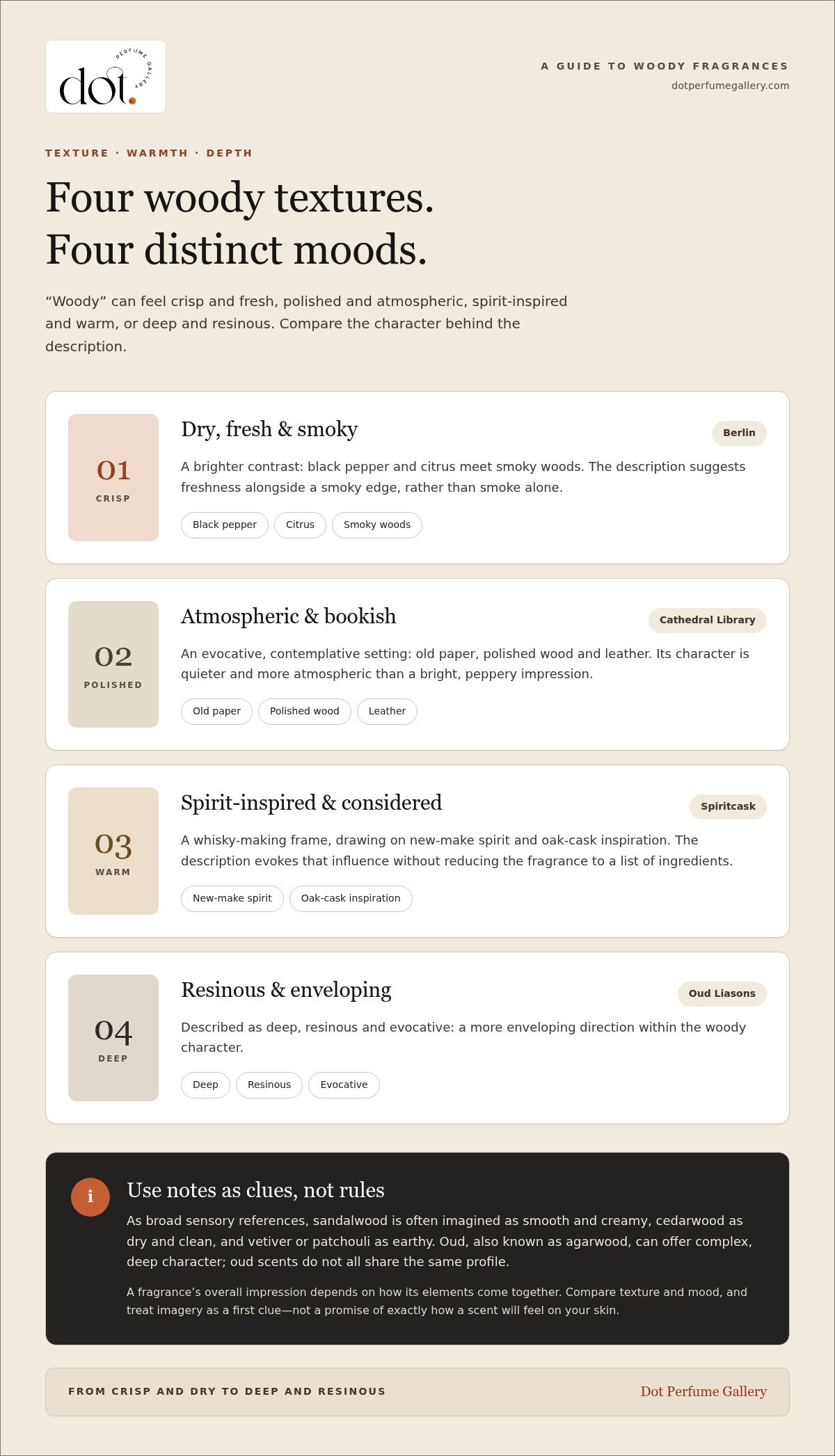
Woody textures can move from clean and dry to smooth and creamy, then deepen into earthy or resinous warmth. Use these comparisons to identify the mood you’re drawn to, not to predict every detail of a perfume.
Texture: Dry and crisp. Mood: Fresh, with a smoky edge. Example: Berlin’s description brings together black pepper, citrus and smoky woods.
Texture: Polished and atmospheric. Mood: Bookish and contemplative. Example: Cathedral Library evokes old paper, polished wood and leather.
Texture: Spirit-inspired and warm. Mood: A considered nod to whisky-making. Example: Spiritcask draws on new-make spirit and oak-cask inspiration.
Texture: Deep and resinous. Mood: Evocative and enveloping. Example: Oud Liasons is described as deep, resinous and evocative.
Dry, crisp and smoky character
Berlin shows how freshness can sit beside smoke: black pepper and citrus bring a brighter contrast to the smoky woods in its description. Cathedral Library takes a quieter, more atmospheric path, conjuring old paper, polished wood and leather. One suggests contrast; the other evokes the hush of a room lined with well-loved books. Their descriptions give you a clear way to compare the moods without reducing either fragrance to a single note.
Creamy, earthy and resinous character
As broad sensory references, sandalwood is often imagined as smooth and creamy, cedarwood as dry and clean, and vetiver or patchouli as earthy. These associations can help you find words for what you like, but they don’t tell the whole story of a finished fragrance. Oud, also known as agarwood, offers another route to complex, deep character, though oud scents don’t all share the same profile.
Spiritcask’s inspiration lies in new-make spirit and the oak cask, giving its description a whisky-related frame without reducing it to a list of ingredients. Oud Liasons, by contrast, is characterised as deep, resinous and evocative. If one of these textures appeals to you, browse the woody fragrance collection to explore its range of moods.
Standout woody perfumes: compare character before choosing
Product descriptions can help you decide which direction to explore, especially when you compare the atmosphere they evoke instead of searching for one universal idea of a woody scent. These examples span freshness, quiet bookishness, whisky inspiration and oud depth. Each description is a starting point for imagining a fragrance, not a promise of exactly how it will smell or develop on your skin.
Notice which image holds your attention. Do you picture a bright, peppery impression, the stillness of a library, the warmth suggested by oak casks or something deep and resinous? Your first response can help narrow a varied selection to a mood that feels personal.
For fresh woods and atmospheric settings
Berlin’s description brings black pepper and citrus together with smoky woods, suggesting a fresh, contrasting direction. Cathedral Library instead draws on old paper, polished wood and leather for a bookish, atmospheric impression. The descriptions point towards different scenes and textures, rather than making a measurable promise about which fragrance is lighter or heavier.
If you’re drawn to brightness and contrast, begin with Berlin. If you prefer a quieter, more contemplative image, Cathedral Library may be the more compelling description. Note the materials or ingredients you enjoy imagining, then use that preference to guide what you explore next.
For whisky warmth and oud depth
Spiritcask is described as a gourmand whisky fragrance, inspired by new-make spirit and oak casks. That whisky-making reference gives it a distinct point of difference from a fresh, citrus-led or bookish direction. Oud Liasons takes another path: it is characterised as deep, resinous and evocative. These descriptions suggest contrasting moods without making extra claims about notes or performance.
Read them side by side. Spiritcask may appeal if the whisky and oak-cask framing catches your imagination; Oud Liasons may draw you in if you’re curious about a more resinous sense of depth. Oud-led fragrances don’t all smell alike, so use this description as a guide to this example, not a rule for the whole category.
To compare the four, choose a word before you browse: fresh, bookish, whisky-inspired or resinous. Then ask what you’re responding to: the materials evoked, the contrast between facets or the atmosphere as a whole. This helps you focus on what matters to you, especially if you’re still learning which woody expressions suit your taste.
Once you recognise a preferred direction, explore the woody fragrance collection to compare these varied characters. Let the descriptions guide your curiosity while leaving room for the fragrance itself to surprise you.
How to choose a woody fragrance that feels like you
Start with what you already enjoy rather than trying to find the “right” fragrance for everyone. Think of polished timber, cool earth after rain or the gentle softness of cream. Which texture feels inviting? Then consider the mood you want the scent to accompany. A fragrance you feel comfortable wearing is a more useful choice than one selected simply because it sounds impressive.
Begin with the woody texture you enjoy, then explore how it’s presented. This four-step process can turn a broad preference into a more considered choice:
- Identify a texture. Decide whether you’re drawn to dry and clean, smooth and creamy, earthy or resinous impressions. Familiar materials can make abstract descriptions easier to interpret.
- Choose a mood. Consider whether you want something fresh, smoky, bookish or warm. Think about how you’d like to feel instead of following a trend or a strict seasonal rule.
- Compare descriptions. Look for words that match your preferred texture and atmosphere. Notice contrasts too: a fresh opening, for instance, may sit alongside a darker or warmer character.
- Consider sampling. If you have the opportunity to experience a fragrance on skin, take time to notice your own response. A private perfume consultation, available by appointment Tuesday to Thursday evenings, is another way to explore fragrance.
Match the fragrance to your preferred mood
Use mood as your first browsing cue. Berlin offers a fresh, smoky direction, whilst Cathedral Library suggests a bookish atmosphere; Spiritcask brings whisky inspiration, and Oud Liasons points towards resinous depth. These are starting points, not boxes you need to fit. Ask which scene appeals to you, then follow that curiosity rather than choosing a scent because it’s fashionable.
Avoid common buying mistakes
Don’t assume every fragrance in this family smells alike, or choose solely because a description sounds beautiful. Evocative language can spark interest, but your own preferences matter more: a smoky or resinous image may appeal in theory and feel different in practice. Use the description to shortlist possibilities, then, where you can, sample or experience the scent in person before settling on a favourite.
Occasion can help, too, without dictating your choice. You might prefer a lighter impression for a relaxed daytime mood, or a deeper one when you want something more enveloping, but there’s no fixed rule about season, setting or time of day. Let comfort lead. Once you have a texture and atmosphere in mind, explore the woody fragrance collection and see which descriptions feel closest to your taste.
Explore the woody collection and find your next scent
You’ve considered texture, mood and the descriptions that draw you in. Bring those impressions together: are you seeking something clean and dry, softly creamy, earthy, smoky or resinous? There’s no single answer to what a woody perfume should feel like. Dot Perfume Gallery’s curated collection brings together 52 fragrances with varied characters, so you can explore beyond one familiar idea of woods.
A final checklist before you choose
Before settling on a direction, pause over these questions. They can help you compare the whole impression instead of letting one striking word make the decision for you.
- Which texture appeals most? Consider dry, creamy, earthy, smoky or resinous character, and the materials or scents you already enjoy.
- What mood are you looking for? You might want a brighter, more invigorating impression, something contemplative or a warmer, more enveloping atmosphere.
- Have you read the full description? Notice how its different facets are presented together, rather than relying on the family label alone.
- Does it feel like your choice? Choose for your own enjoyment, not assumed rules about who can wear a scent, when it should be worn or which season it belongs to.
Descriptions can make an unfamiliar fragrance easier to imagine, but they’re invitations to explore, not guarantees of how it will feel to you. If you can experience a scent personally, let your own response have the final say.
Continue exploring with Dot Perfume Gallery
There’s no need to rush towards a decision. Browse at your own pace, following the descriptions that catch your attention and noticing whether you’re drawn to a fresh, smoky, bookish, whisky-inspired or oud-led direction. The collection brings together different expressions of woody character, giving you a range of atmospheres to compare.
If you’d value a more personal way to explore your preferences, Dot Perfume Gallery offers private perfume consultations by appointment on Tuesday to Thursday evenings. Consider the textures and moods you enjoy, then use those preferences to guide your search through niche and luxury fragrances.
Keep your chosen texture and mood in mind as you browse, and let curiosity lead rather than expectation. Explore the woody perfume collection and find a character that feels at home with you.
Let curiosity lead you to your next scent
Choosing a fragrance can be less like solving a puzzle and more like recognising something you want to keep close. Give yourself room to follow a detail that stirs a memory, feels reassuring or simply makes you want to discover more. Your own response is worth trusting, even if it doesn’t fit a familiar idea of what a perfume should be.
A scent becomes personal through the moments you choose to wear it and the associations it gathers over time. Rather than looking for a definitive answer, let your interest guide you towards a fragrance that feels natural to return to. The most rewarding woody choice may be the one that feels like an extension of your own sensibility, not a statement you need to explain.
Take time to explore and notice what stays with you. Explore the woody perfume collection and let your next discovery begin at your own pace.
Frequently Asked Questions
Is a woody perfume always warm and heavy?
No. Woody fragrances can feel fresh, crisp or dry as well as deep and resinous. The balance of accords shapes the overall impression, so the family label alone can’t tell you how intense a scent may seem. Berlin’s description, for example, includes citrus alongside smoky woods, suggesting contrast rather than unbroken heaviness. Read the full description to understand its direction, then consider which facets appeal to you.
Can woody perfume be worn in warmer weather?
Yes. There’s no universal seasonal rule for fragrance, so your own preferences are a useful guide. If you enjoy woody scents but want something that feels less dense, look for descriptions suggesting freshness or a crisp, dry character. This can help narrow your browsing, but it doesn’t guarantee how a particular perfume will feel in warm weather. Choose what you enjoy wearing.
Are woody fragrances suitable for anyone to wear?
Yes. Fragrance preferences are personal, and woody describes a scent character rather than a gender rule. You might be drawn to a dry, clean impression, creamy softness, earthy depth or resinous richness; none belongs exclusively to one kind of wearer. Notice which textures you enjoy and feel comfortable exploring them, regardless of how a fragrance is traditionally presented.
How can I choose a woody perfume as a gift?
Start with what the recipient already enjoys: perhaps the scent of polished wood, the grounded feel of earth or a soft, creamy warmth. Use that preference to choose a direction, such as clean and dry or deeper and resinous, then read the fragrance description with them if possible. Scent is intimate and individual, so a private perfume consultation can be a thoughtful way to explore their tastes.
What is the difference between oud and other woody notes?
Oud, also known as agarwood, is one direction within woody perfumery and is often associated with complex depth. Cedarwood is commonly linked with a cleaner, drier impression, whilst sandalwood is often described as creamy and warm. These are broad points of comparison, not fixed formulas: a fragrance’s full composition shapes its character, and oud perfumes can differ considerably from one another.
How should I compare woody perfume descriptions when shopping online?
Look for the materials, textures and moods named in each description, then compare them with scents you already enjoy. If familiar earthy aromas appeal to you, that may be a helpful clue; if you prefer a cleaner impression, focus on language suggesting dryness or freshness. Evocative copy can point you towards a style, but it can’t guarantee how a perfume will smell to you, so take your time.